A gherkin is a small, immature cucumber grown specifically for pickling. It is usually harvested when very young, giving it a crisp texture, firm skin, and tangy flavor once brined or preserved.
Gherkins have quietly become one of India’s most successful agricultural exports, supplying kitchens, food manufacturers, and global FMCG giants across more than 50 countries.
In 2020–21, India exported over 2,23,515 metric tonnes of cucumbers & gherkins worth US $223 million.
In 2023-2024 exports rose ~17 % year-over-year to record value of US$ 256.58 million, on strong European demand.
This brings us to answer the important question, that is WHY GLOBAL BRANDS PREFER INDIAN GHERKINS?
The country offers a warm climate, well-drained soil, long growing seasons, and reliable sunlight, all of which help gherkins grow faster, healthier, and with better crunch.
Regions in India, especially parts of Karnataka, Tamil Nadu, Andhra Pradesh and neighbouring states, have soil and climate conditions well suited for gherkin cultivation.
With improved agricultural practices over the years, yield & quality have increased, allowing Indian gherkins to meet global standards.

India’s gherkin industry is built for scale, supported by a well-organized supply chain that keeps exports smooth and reliable.
From large cultivation areas to advanced processing units and efficient logistics, the entire system is designed to meet global demand without compromising on quality or timelines.
India has a large base of gherkin farmers: about 90,000 small and marginal farmers cultivate a total production area of around 65,000 acres.
The cultivation-cycle is efficient: gherkins are grown on a ~90-day crop cycle, and often two crops are harvested annually.
There are many exporters and processing units, about 51 major companies in India produce and export gherkins in bulk drums and ready-to-eat jars.
This robust farming and processing ecosystem ensures reliability and continuity of supply, a critical factor for global brands seeking stable sourcing.
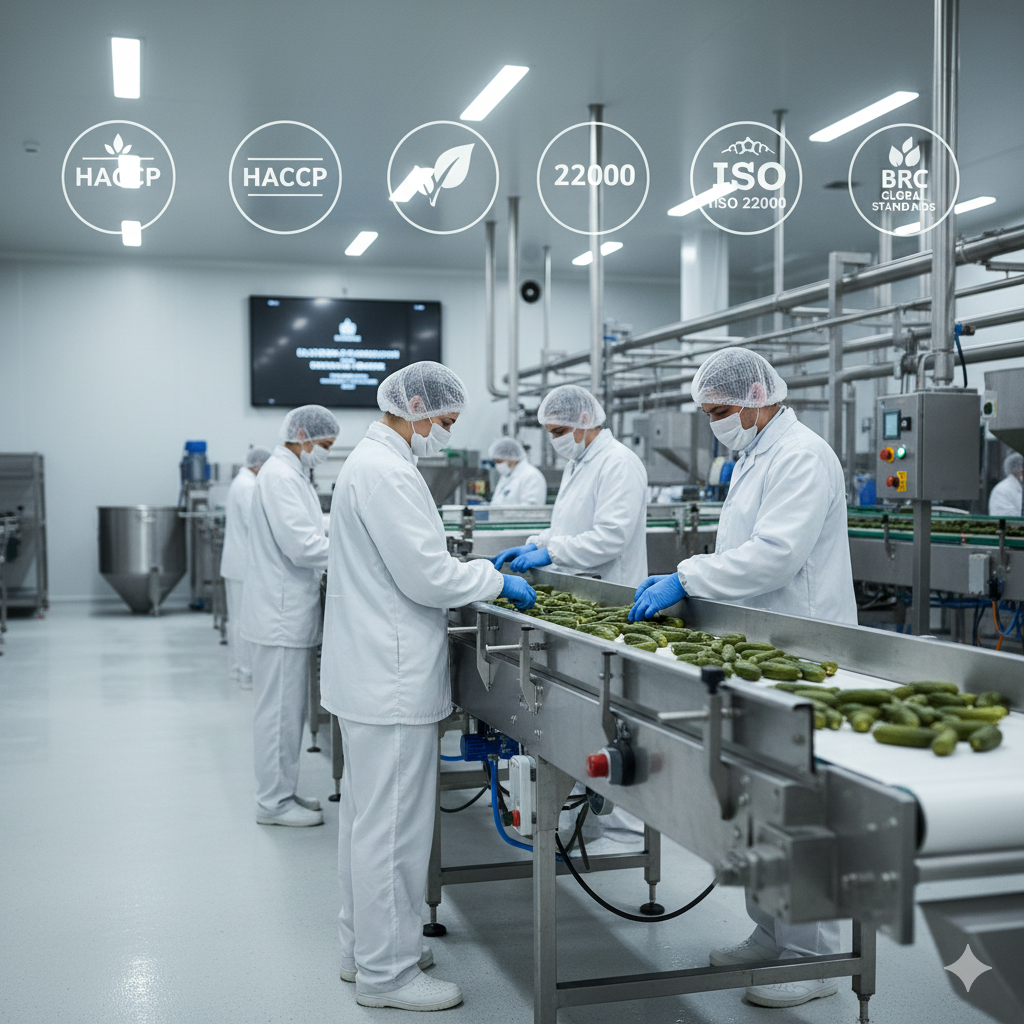
Indian exporters maintain world-class quality systems, ensuring every product aligns with the standards set by major global markets.
With certifications like HACCP, BRC, and ISO, the industry delivers gherkins that match the expectations of leading brands worldwide.
From farm practices to final packaging, the entire process is closely monitored and certified.
This compliance makes Indian gherkins acceptable for strict importing markets (Europe, North America, etc.), giving confidence to global buyers about food safety, consistency and shelf-life.
India’s cost-effective production system allows exporters to offer premium quality gherkins at budget friendly rates, making the country a preferred sourcing hub.
- Favourable growing climate supports high-quality gherkin cultivation with consistent yields.
- High agricultural productivity and efficient farming systems reduce overall production costs.
- Large-scale cultivation ensures steady supply, making India a reliable sourcing hub.
- Lower labour and land costs compared to many Western countries make Indian gherkins more price-efficient.
Cost competitiveness without quality compromise attracts global brands seeking value and standards.
Strong export success and global demand indicate India’s strong value proposition in the gherkin market.
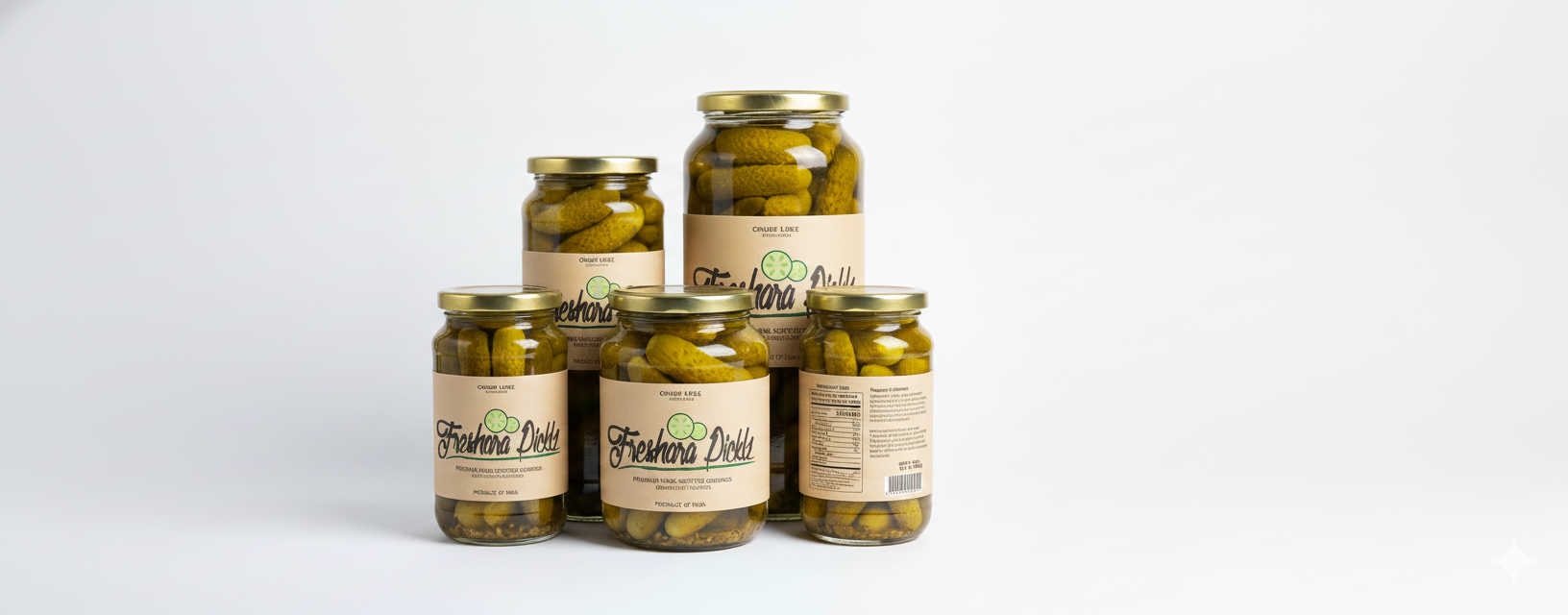
One of India’s strengths is its ability to supply gherkins in multiple sizes, perfectly suited for different processing requirements and product categories.
- Two export formats:
- Bulk supply (industrial barrels/drums for further processing)
- Ready-to-eat retail packs (jars, pouches, and consumer-ready formats
- Caters to all types of global buyers:
- Large food companies needing raw material for their product lines
- Pickle/condiment manufacturers who repack or process further
- Retail brands looking for ready-to-sell gherkin products
High versatility means wider market reach, making India a preferred sourcing destination.
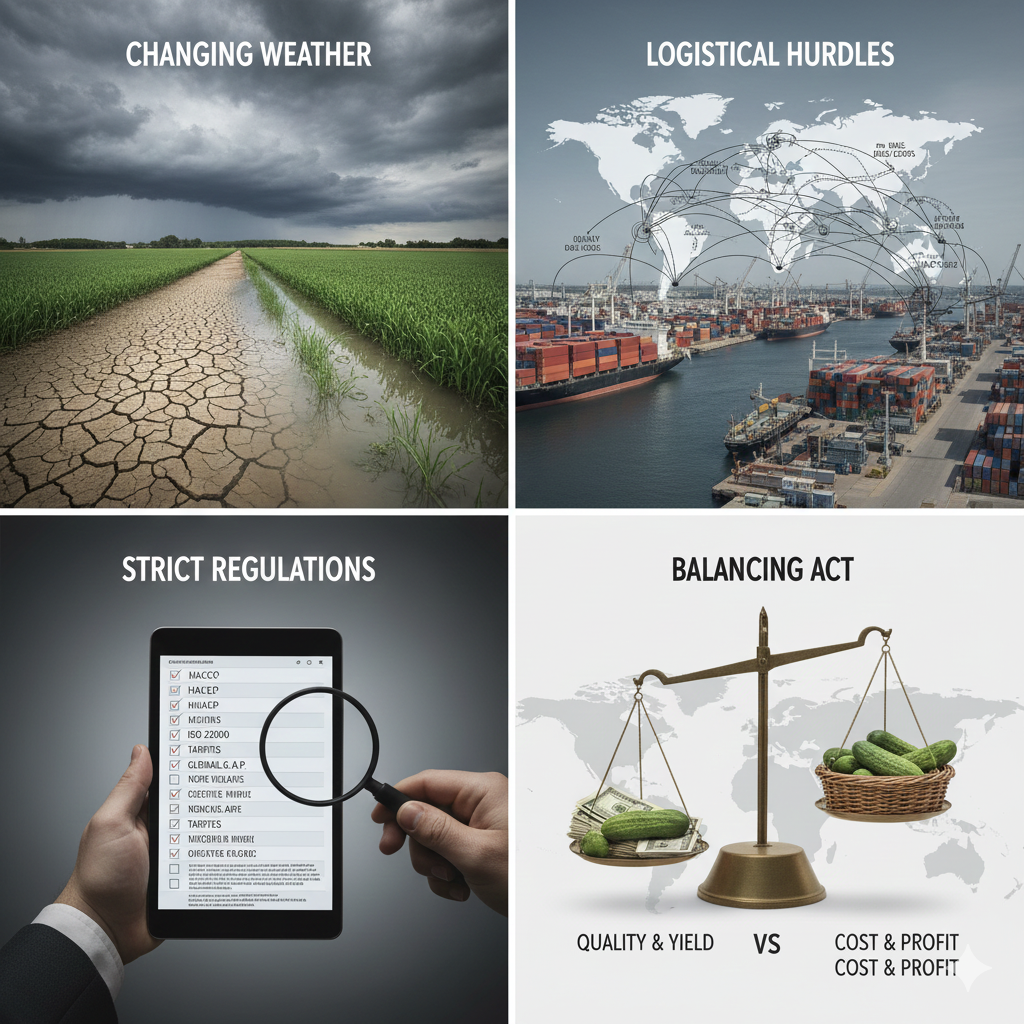
India’s gherkin industry may be strong, but it still faces a few practical challenges that can impact consistency and costs.
Understanding these issues helps businesses plan better and stay competitive.
- High freight costs: Shipping to far markets (like the US) can be expensive, making it harder to compete with suppliers located closer.
- Import duties: Some countries charge 10–14% duty on pickled imports, which reduces the overall cost advantage.
- Climate dependence: Gherkin farming relies heavily on monsoons and stable weather. Poor rainfall or extreme heat can affect yield and quality.
- Strict quality requirements: Global buyers expect strong food safety, hygiene, and certification standards — exporters must maintain strict compliance.
Still, despite these challenges, India’s scale, strong supply chain, and proven reliability keep it one of the most preferred gherkin sources worldwide.
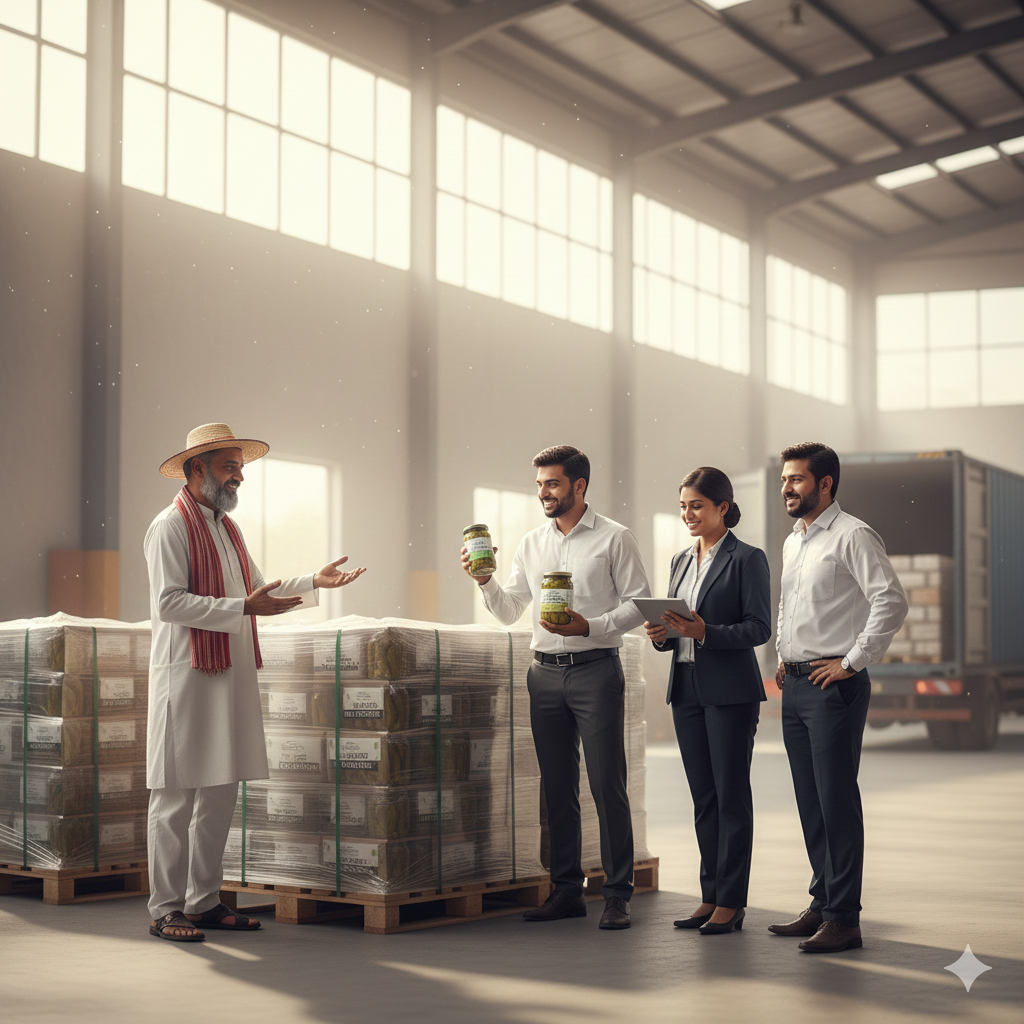
As global food trends shift toward convenience, bold flavors, and healthier snacking, gherkins are becoming increasingly popular in both established and emerging markets.
This rising interest creates new opportunities for India to expand into regions that are just beginning to adopt pickled and fermented products.
At the same time, traditional buyers are diversifying their product lines, increasing demand for various gherkin grades and packaging formats.
Together, these shifts open the door for India to strengthen its presence worldwide and tap into significant growth potential in 2025 and beyond.
While Europe and the US remain strong buyers, new markets are opening up rapidly:
- Eastern Europe prefers high-acidity bulk gherkins for meat processing.
- South Korea imports gherkins for sushi chains and convenience stores.
- Brazil and Argentina use gherkins in burgers and fast food.
- Middle East retail chains import ready-to-eat jars.
- Africa is expanding retail imports of pickled cucumbers.
Global brands choose Indian gherkins because India offers a rare combination of scale, quality, and cost efficiency.
With ideal growing conditions, high-yield farming, competitive production costs, and strict adherence to international food safety standards, India delivers consistent value that few countries can match. Supported by a strong export ecosystem and thousands of trained small farmers, Indian gherkins have become a dependable choice for both bulk processors and retail-ready brands worldwide.
As global demand for pickled and ready-to-eat foods grows, India’s gherkin industry is positioned to remain a leading, trustworthy, and highly competitive sourcing hub.
Looking to source premium Indian gherkins and build a reliable long-term supply partnership?


